
Male Facelift vs Female Facelift: Incisions, Beard Line, Hairline and Masculine Contours
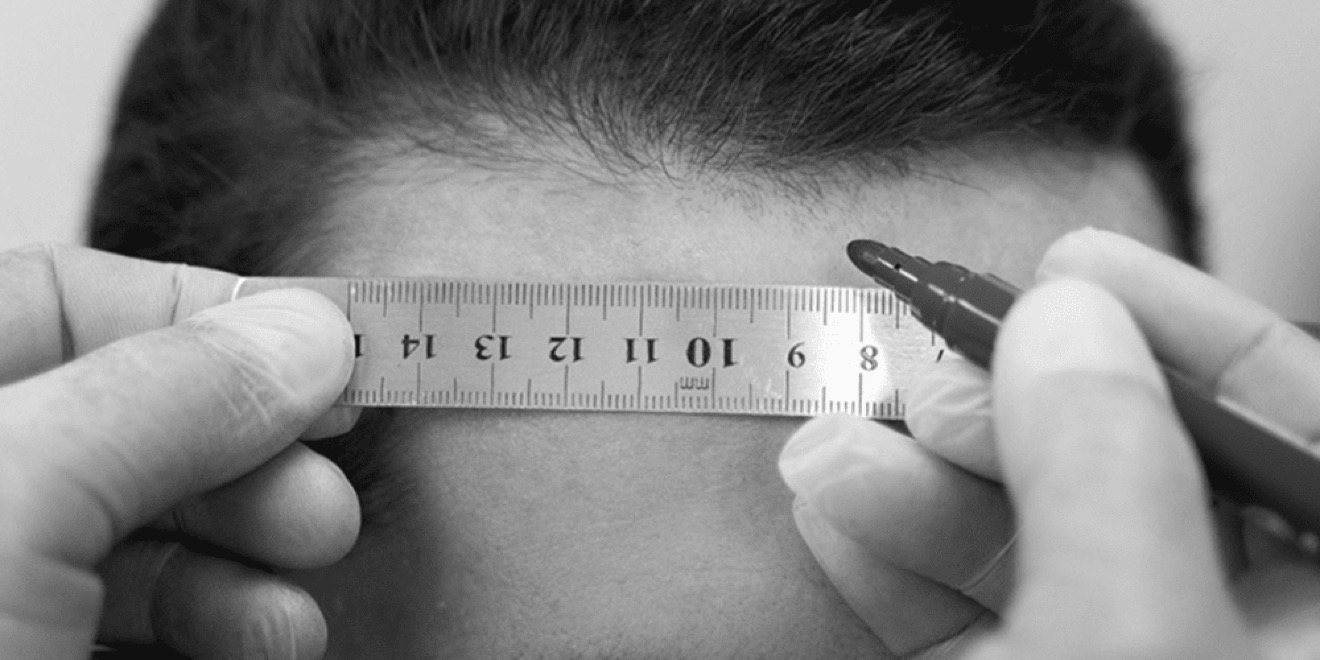
A male facelift uses similar deep tissue principles to a female facelift, but incision design, hair-follicle preservation, beard-line placement, and jawline vectors are planned differently. Men have thicker, more vascular facial skin and a higher postoperative hematoma risk, so surgical planning focuses on concealing scars with short hair and maintaining angular, masculine lower-face and neck contours.
How does a male facelift differ from a female facelift?
While the deeper anatomical layers lifted during a facelift are the same in men and women, surface anatomy, hair-bearing landmarks, and aesthetic targets differ clearly [1]. Female facial rejuvenation often softens the jawline and restores gentle cheek fullness, whereas male surgery preserves a crisp gonial angle, a straight mandibular border, and a defined cervicomental angle without a pulled or feminized appearance [3].
Men also commonly wear shorter hairstyles, making scar placement and closure precision critical [1]. In addition, male facial skin is thicker and more vascular across beard-bearing areas, directly affecting bleeding control and postoperative monitoring [4].
| Planning factor | Female facelift | Male facelift |
|---|---|---|
| Preauricular incision | Frequently placed behind the tragus (retrotragal) | Often placed in front of the ear (pretragal) to keep the hairless strip, or retrotragal with follicle removal [2] |
| Beard and sideburn landmarks | No beard-bearing cheek skin | Sideburn height and beard border preserved so hair does not migrate onto the ear [1, 2] |
| Temporal and posterior hairline | Often concealed by longer hair | Designed for short or thinning hair without creating a visible step-off [1] |
| Jawline and neck target | Smooth, tapered jawline and soft cheek contour | Crisp gonial angle, straight mandibular border, and sharp cervicomental angle [3] |
| Hematoma risk | Lower baseline rate in comparative series | Higher postoperative hematoma incidence in male cohorts, requiring strict blood pressure control [4] |
Incisions, beard line, and hairline preservation
In men, incision design is a defining technical step because beard growth and short hair expose details that longer hair might conceal [1]. A narrow natural strip of hairless skin separates the sideburn from the front of the ear; pulling cheek skin over the tragus without adjustment can shift beard growth onto the ear itself [2].
- Pretragal vs. retrotragal incision: A crease incision in front of the ear preserves the hairless strip. When a retrotragal (behind-the-tragus) incision is chosen, the surgeon removes hair follicles from the underside of the advanced skin flap so beard hair does not grow on the tragus [2].
- Sideburn height: Pulling skin purely backward or too high elevates the sideburn unnaturally; a tailored vector and sub-sideburn incision preserve natural position.
- Trichophytic closure: Along the temple or posterior hairline, a beveled trichophytic closure lets hair grow through the scar edge, reducing visibility with short or thinning hair [1]. See our guide on facelift scars for scar maturation details.
- Posterior ear incision: Behind the ear, the line respects the posterior hairline to avoid a step-off with cropped hair.
Deep tissue vectors and masculine contours
Tightening skin alone is a leading cause of an unnatural, stretched result. Contemporary techniques reposition deeper supportive structures—such as the superficial musculoaponeurotic system (SMAS) or extended deep plane—so skin redrapes with minimal tension [3].
In male deep-plane face and neck lifting, a more vertical repositioning vector elevates descended jowls and midface tissues without flattening the lateral jaw or pulling mouth corners sideways [3]. Rebuilding a clean gonial angle and cervicomental angle beneath the chin maintains a masculine silhouette [3].
Many men present mainly with heavy neck laxity, platysmal bands, or submental fullness. When the lower face and neck age together, combining lower-face repositioning with a neck lift treats the contour in continuity. See neck lift: who is it suitable for and natural-looking facelift for further context.
Hematoma risk and medical considerations in men
Published studies consistently document higher postoperative hematoma rates in male facelift patients than in women [4]. In a 20-year single-surgeon retrospective comparison of 83 consecutive male rhytidectomies and 83 age-matched female controls, postoperative hematoma occurred in 6.0% of male patients (5 of 83) versus none in the female group (p = 0.0587), with no other complications recorded [4].
This higher tendency relates to richer vascularity around beard follicles, thicker dermal tissue, and more frequent hypertension [4]. Preventive measures emphasize thorough medical screening, strict preoperative and postoperative blood pressure control, avoiding hypotensive anesthesia that can mask bleeding vessels during closure, and reviewing blood-thinning drugs or supplements [4]. Nicotine also impairs flap circulation and raises wound-healing and scarring risks, so complete cessation before and after surgery is required.
Who is not a good candidate?
A male facelift may be unsuitable, or should be postponed, if:
- Uncontrolled hypertension or bleeding disorders: Elevated blood pressure significantly raises hematoma risk and must be stabilized medically first [4].
- Active smoking or vaping: Ongoing nicotine use increases skin-edge healing complications and visible scarring.
- Minimal skin laxity: Younger men with mild submental fat and firm skin may be better evaluated for targeted contouring rather than a full facelift.
- Unrealistic expectations: Expecting invisible scars with shaved hair, zero downtime, or surgery that halts natural aging.
- Unstable general health: Uncontrolled diabetes, active heart disease, or anesthesia contraindications.
Recovery timeline and travelling after surgery
Swelling, neck tightness, and bruising are most noticeable during the first 7 to 10 days. Patients receive clear instructions on when to resume gentle electric trimming and later wet shaving around healing, temporarily numb incisions. Most men return to social settings in 2 to 3 weeks, while subtle firmness and scar maturation continue over 3 to 6 months. See facelift recovery week by week for stage-by-stage detail.
Potential risks include hematoma, temporary (and rarely prolonged) cheek or ear numbness, temporary hair thinning near scalp incisions, asymmetry, visible scarring, infection, and rarely facial nerve branch weakness. Every incision leaves a scar, even when meticulously closed. International patients travelling to Istanbul confirm return flight timing after postoperative surgical clearance; see flying after plastic surgery in Istanbul.
Assoc. Prof. Dr. Yalçın Bayram's approach
Assoc. Prof. Dr. Yalçın Bayram, a specialist in plastic, reconstructive and aesthetic surgery, evaluates male facelift candidates by assessing beard distribution, sideburn position, hairline density, skin thickness, and jawline-to-neck transition. Consultations and follow-ups take place at his Nişantaşı practice in Istanbul, and surgery is performed in a hospital.
International patients can start with a personal photo pre-assessment reviewed by Assoc. Prof. Dr. Yalçın Bayram before travelling; the final plan is confirmed face to face in Istanbul. The goal is a rested masculine contour rather than an over-pulled look. Visit international patients and about us, or reach out via contact.
Frequently Asked Questions
Will beard hair grow on my ear after a male facelift?
This can happen if beard-bearing cheek skin is advanced over the tragus unmodified. Surgeons prevent it by placing a pretragal incision to preserve the hairless strip or, if a retrotragal incision is chosen, by carefully removing hair follicles from the flap [2].
Are facelift scars noticeable with short or thinning hair?
Every incision leaves a scar, and short or receding hair offers less cover. Placing incisions in natural creases, preventing hairline step-offs, and using trichophytic closure keep scars as discreet as possible as they mature [1].
Why do men face a higher hematoma risk after a facelift?
Male facial skin is thicker with denser blood supply around beard follicles, and elevated blood pressure is more frequent. Comparative cohort data confirm higher hematoma rates in men than in age-matched women, making blood pressure control essential [4].
Can a male facelift look natural without feminizing the face?
Yes, when deep tissue vectors and volume decisions match male anatomy. Preserving a crisp jawline, defined gonial angle, and structured neck contour yields a fresher appearance while keeping masculine traits intact [3].
When can I shave after a male facelift?
Shaving over or next to healing incisions is avoided initially while skin sensation is reduced. Your surgeon advises when gentle electric trimming and later wet shaving can safely resume.
References
- Daraei PP, Marshall RV, Adams AS, Rousso DE. The Male Facelift. Facial Plast Surg. 2020;36(4):404-415. PMID: 32866978 · DOI: 10.1055/s-0040-1713827
- Cremone J, Courtiss EH, Baker JL. Male rhytidectomy incisions. Plast Reconstr Surg. 1983;71(3):423-426. PMID: 6828571 · DOI: 10.1097/00006534-198303000-00027
- Bray D, Talei B. Male Deep-Plane Face and Neck Lifting: Advanced and Customized Techniques. Facial Plast Surg Clin North Am. 2024;32(3):339-351. PMID: 38936991 · DOI: 10.1016/j.fsc.2024.02.003
- Rohrich RJ, Stuzin JM, Ramanadham S, Costa C, Dauwe PB. The Modern Male Rhytidectomy: Lessons Learned. Plast Reconstr Surg. 2017;139(2):295-307. PMID: 28125532 · DOI: 10.1097/PRS.0000000000003008
Last reviewed: November 2026
Medical review: This article has been medically reviewed by Assoc. Prof. Dr. Yalçın Bayram, specialist in plastic, reconstructive and aesthetic surgery (Şişli, Istanbul). For his background and academic publications, see about us. This article is for general information; the right approach for you is decided at consultation.