
Gynecomastia Surgery: True Glandular Tissue vs Fat, Grades and Surgical Options
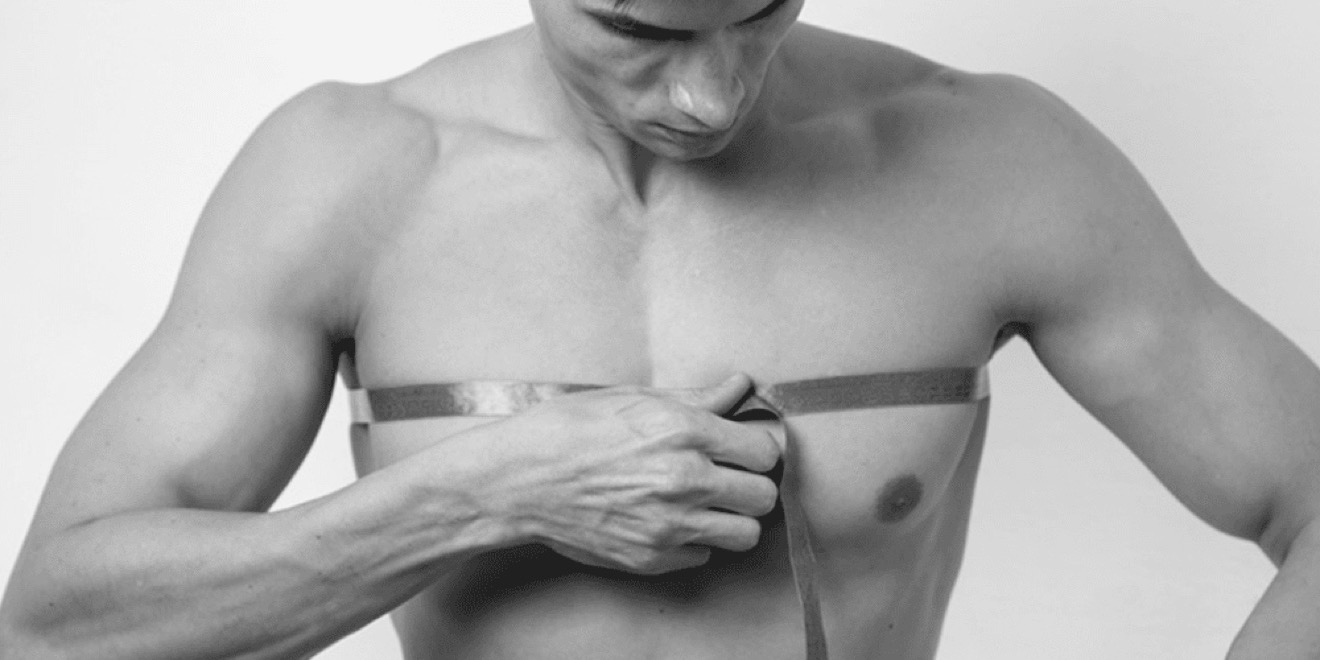
True gynecomastia involves benign proliferation of firm glandular breast tissue in men, whereas pseudogynecomastia consists of excess chest fat alone. Most adult cases combine both elements in varying proportions. Choosing between liposuction, transareolar gland excision, and skin tightening or excision depends on tissue composition, skin elasticity, and clinical grade, evaluated during consultation.
True gynecomastia vs. pseudogynecomastia: why it matters
Gynecomastia is defined as benign glandular breast tissue in men, usually driven by an increased effective estrogen-to-androgen ratio at the breast [1, 2]. Pseudogynecomastia, by contrast, is chest fullness from subcutaneous fat alone without a firm retroareolar gland disc. Most men seeking gynecomastia surgery have a mixed picture—dense glandular tissue beneath the areola plus surrounding fat.
Distinguishing gland from fat is essential because fibrous glandular tissue does not respond to diet, exercise, or standard liposuction alone. Leaving a glandular core behind the nipple causes persistent puffiness, while excising gland without blending surrounding fat can leave uneven chest contours [3].
Causes and preoperative medical assessment
Before planning surgery, clinicians evaluate why enlargement developed. Most cases are idiopathic or persist from pubertal hormonal shifts [1, 2]. Adolescent gynecomastia is common and usually resolves spontaneously; surgery is reserved for persistent, distressing cases affecting self-esteem once growth stabilizes [2].
In adults, history and examination screen for reversible or underlying triggers [1]:
- Medications and substances: Certain prescription drugs, hormonal therapies, or anabolic agents can trigger enlargement or tenderness [1].
- Hormonal imbalance: Primary or secondary hypogonadism shifts the estrogen-to-androgen balance [1].
- Systemic illness: Liver disease, renal failure, or thyrotoxicosis can cause gynecomastia and require medical management first [1].
- Rare causes: Rapid-onset or unilateral enlargement may warrant hormonal testing or imaging to exclude steroid- or hCG-producing tumors or other breast lesions [1].
Correcting reversible causes comes first. Anti-estrogen therapy may have some effect in selected early cases, whereas long-standing fibrous gland tissue typically requires surgical excision [1].
Gynecomastia grades and surgical options
Treatment options are commonly organized along a modified Simon classification based on breast volume and skin excess [3]. The aesthetic goal is near-total glandular reduction, natural nipple-areola position and shape, and smooth masculine skin adherence reflecting the pectoralis contour [3].
| Grade (modified Simon) | Typical chest findings | Surgical options considered [3] |
|---|---|---|
| Grade I (mild) | Localized subareolar gland enlargement, no excess skin | Transareolar gland excision, with or without localized liposuction |
| Grade IIa (moderate, no skin excess) | Moderate gland and surrounding fat; good skin recoil | Liposuction (including ultrasound-assisted lipoplasty), transareolar gland excision, and inframammary fold release [3] |
| Grade IIb (moderate, minor skin excess) | Moderate enlargement with mild laxity or crease definition | Liposuction, gland excision, inframammary fold disruption, plus selected bipolar radiofrequency tightening or periareolar adjustment [3] |
| Grade III (marked enlargement and excess skin) | Large volume, pronounced skin redundancy, low nipple position | Tissue reduction combined with formal skin excision and nipple-areola repositioning (pedicled mastopexy patterns or free nipple grafts) [3] |
Grades I and II typically need only small liposuction ports and a discreet semicircular incision along the lower areolar border. Grade III—common after major weight loss—requires formal skin excision to flatten loose skin, accepting longer chest scars for a flat masculine contour [3]. For scar care details, see preventing and treating hypertrophic scars after surgery.
Technical nuances for natural chest contour
Good gynecomastia surgery sculpts rather than simply empties the chest. Removing all tissue directly under the nipple without a thin supportive layer can cause an inward crater deformity as skin adheres to muscle, whereas under-resection leaves projection. Key contemporary principles include [3]:
- Inframammary fold disruption: Releasing a sharp lower crease creates a smooth chest-to-abdomen transition [3].
- Surrounding fat feathering: Blending lateral and lower pectoral borders with liposuction follows masculine muscle anatomy [3].
- Controlled closure tension: Avoiding excessive skin tension lowers risks of delayed healing and widened scars [3].
Who is not a good candidate?
Surgery may be unsuitable, or should be deferred, if:
- An active reversible cause is untreated: Triggering medications, hormonal disorders, or systemic illness must be managed first [1].
- Recent-onset adolescent enlargement: Early pubertal gynecomastia often resolves spontaneously and is usually observed first [2].
- Ongoing major weight loss: Reaching a stable weight before contouring avoids shifting skin excess.
- Active smoking or uncontrolled medical illness: Nicotine and unstable systemic conditions elevate wound-healing and hematoma risks.
- Unrealistic scar expectations in Grade III: Expecting severe redundant skin to retract fully without skin-excision scars.
Recovery, compression vest, and travelling home
Surgery is usually performed under general anesthesia in hospital, with same-day discharge or one overnight stay. A fitted medical compression vest is worn for about 4 to 6 weeks to support skin adherence, limit swelling, and reduce fluid buildup. Desk work typically resumes in 5 to 7 days, while heavy lifting and chest workouts pause for 4 to 6 weeks. Early bruising settles over 2 to 4 weeks; final chest flatness matures over 3 to 6 months.
Potential complications include hematoma, seroma, infection, delayed healing (especially with tight closure), contour irregularity, residual fullness or indentation, asymmetry, altered nipple sensation, and visible scarring [3]. International patients confirm return flights after postoperative review; see flying after plastic surgery in Istanbul.
Assoc. Prof. Dr. Yalçın Bayram's approach
Assoc. Prof. Dr. Yalçın Bayram, a specialist in plastic, reconstructive and aesthetic surgery, evaluates the balance of gland, subcutaneous fat, inframammary fold definition, and skin elasticity alongside medical history or breast ultrasound when indicated. Consultations and follow-ups take place at his Nişantaşı practice in Istanbul, and surgery takes place in a hospital.
International patients can begin with standardized chest photos reviewed personally by Assoc. Prof. Dr. Yalçın Bayram before travelling; final palpation, grading, and surgical planning are confirmed in person in Istanbul. The aim is a flat, proportional masculine chest with discreetly placed scars. See international patients, about us, or contact.
Frequently Asked Questions
How can I tell if I have true gynecomastia or just chest fat?
True gynecomastia typically feels like a firm, rubbery, sometimes tender disc beneath the nipple and areola, whereas chest fat feels softer and diffuse. Examination by a plastic surgeon—and ultrasound when needed—clarifies the proportion of gland and fat.
Can liposuction alone treat gynecomastia?
Liposuction effectively removes excess fat in pure pseudogynecomastia. When a firm glandular core is present, liposuction alone is usually insufficient and transareolar gland excision is added to prevent persistent nipple puffiness [3].
Can gynecomastia come back after surgery?
After thorough glandular excision, significant regrowth is uncommon. However, substantial weight gain, hormonal shifts, or triggering medications and anabolic agents can cause renewed chest fullness [1].
Will I have visible scars after gynecomastia surgery?
Grades I and II use small access ports and a semicircular incision along the lower areolar border, which usually fade well. Grade III cases with substantial loose skin require additional skin-excision incisions to flatten the chest [3].
How long must I wear the compression vest and stay in Istanbul?
A compression vest is typically worn for 4 to 6 weeks. Stay length in Istanbul depends on surgical grade and whether skin excision or drains are used; return travel is cleared after postoperative review.
References
- Glass AR. Gynecomastia. Endocrinol Metab Clin North Am. 1994;23(4):825-837. PMID: 7705322
- Guss CE, Divasta AD. Adolescent Gynecomastia. Pediatr Endocrinol Rev. 2017;14(4):371-377. PMID: 28613047 · DOI: 10.17458/per.vol14.2017.GD.Gynecomastia
- Hurwitz DJ, Davila AA. Contemporary Management of Gynecomastia. Clin Plast Surg. 2022;49(2):293-305. PMID: 35367036 · DOI: 10.1016/j.cps.2021.12.003
Last reviewed: November 2026
Medical review: This article has been medically reviewed by Assoc. Prof. Dr. Yalçın Bayram, specialist in plastic, reconstructive and aesthetic surgery (Şişli, Istanbul). For his background and academic publications, see about us. This article is for general information; the right approach for you is decided at consultation.